
Repurposing Mebendazole for Cancer: Evidence and Prospects
Origins and Pharmacology of Mebendazole Explained
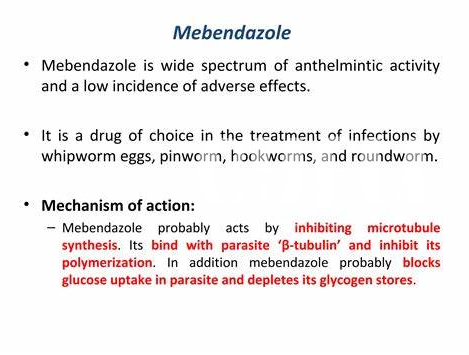
Mebendazole was developed in the 1970s as a broad‑spectrum anthelmintic belonging to the benzimidazole class, introduced because of potent activity and favorable safety compared with predecessors. Its canonical action is inhibition of microtubule polymerization by binding β‑tubulin, which immobilizes parasites and explains its historical use; physicochemical properties include low aqueous solubility and variable oral bioavailability, factors relevant to dosing and formulation.
These microtubule‑targeting properties sparked oncology interest because disrupting mitotic spindles can arrest tumor cell division and trigger apoptosis; preclinical studies also show inhibition of migration, angiogenesis and cancer stem‑like cells. Mebendazole is hepatically metabolized and shows limited systemic exposure at antiparasitic doses, but its long safety record and oral route favor repurposing.
| Feature | Relevance |
| Mechanism | Microtubule inhibition |
| PK | Low bioavailability |
| Safety | Established |
These attributes guide clinical formulation development efforts.
Laboratory Evidence Mechanisms Targeting Tumor Cells
In lab models, mebendazole has surprised researchers by disrupting microtubule dynamics in cancer cells, causing mitotic arrest and apoptosis. Preclinical studies across glioblastoma, colon and lung cancer show reduced proliferation and impaired migration, suggesting a broad anti-tumor effect.
Mechanistic work reveals additional actions beyond tubulin binding: mebendazole induces autophagy, inhibits angiogenesis by downregulating VEGF signaling, and modulates hedgehog and BCL-2 pathways that govern survival. It also sensitizes tumors to chemotherapy and radiotherapy in xenograft models, enhancing DNA damage and shrinking established tumors.
Cellular assays and patient-derived organoids demonstrate dose-dependent cytotoxicity with selective effects on malignant versus normal cells, though potency varies by histology. These converging lines of evidence justify clinical translation while highlighting the need to optimize dosing, delivery and combination strategies. Ongoing mechanistic studies aim to identify biomarkers predicting response and resistance to maximize patient benefit in clinical trials.
Clinical Studies and Case Reports What's Promising
Compelling early-phase trials and anecdotal reports have sparked renewed interest: small studies showed tumor stabilization or regression in some patients given mebendazole alongside standard therapy. Case reports describe unexpected responses in refractory tumors, prompting careful optimism and calls for structured investigation rather than premature clinical use.
Prospective randomized trials remain limited, yet ongoing studies aim to define optimal dosing, combinations, and biomarkers predicting benefit. If validated, mebendazole could offer an affordable adjunct, but rigorous safety data and reproducible efficacy are essential before broader oncology adoption and varied clinical settings globally.
Dosing Safety and Drug Interaction Considerations

Clinicians repurposing mebendazole for oncology must balance anecdote with pharmacology; its oral absorption is variable and higher-fat meals increase bioavailability. Typical antiparasitic doses are far lower than those explored in cancer case series, so careful escalation and monitoring become ethical imperatives.
Safety signals include hepatic enzyme elevations and rare neutropenia; regular liver function tests and blood counts should accompany off-label use. Because mebendazole is metabolized by hepatic enzymes and can inhibit CYPs, coadministration with chemotherapy, anticoagulants, or anticonvulsants risks altered exposure.
Practical stewardship involves starting at conservative doses, documenting adverse events, and coordinating with pharmacy for interaction checks. Until randomized data define optimal regimens, referral to trials or multidisciplinary discussion provides the safest path forward.
Barriers to Clinical Adoption and Regulatory Hurdles
Translating mebendazole from anthelmintic to anticancer therapy clashes with economic and logistical realities. Without patent protection, pharmaceutical investment is limited, leaving small trials underfunded and results fragmented.
Regulators demand standardized dosing, manufacturing controls and large randomized studies; variable bioavailability and compounded formulations complicate approval. Designing trials that satisfy regulatory endpoints while remaining affordable is a persistent challenge.
Clinicians face liability and reimbursement uncertainties when prescribing off-label; patient access hinges on coordinated consortia, pragmatic trial networks and public–private partnerships to generate robust evidence and clear guidance.
| Issue | Needed |
|---|
| Funding | Consortia and grants |
| Formulation | Standardized bioavailable product |
| Regulatory | Adaptive trials and guidance |
| Access | Insurance coverage and clinician education |
| Guidance | Clinical algorithms and policy statements |
| Scale | Manufacturing capacity |
Future Directions Trials Combinations and Translational Research
Emerging studies suggest mebendazole could move from bench to bedside through carefully designed phase I/II trials that prioritize pharmacokinetics and biomarkers of response. Collaboration between academic centers and repurposing consortia will accelerate patient selection strategies and trial enrollment.
Combining mebendazole with targeted agents, immunotherapies, or radiotherapy may produce synergistic effects; preclinical models should map additive toxicities and optimal sequencing. Adaptive trial designs and basket studies can test efficacy across tumor types sharing vulnerable pathways.
Translational work must standardize assays for intratumoral drug levels and downstream pathway inhibition, while mechanistic correlative studies guide rational combination choices. Patient-derived organoids and xenografts will help bridge laboratory signals to clinical benefit. Regulatory engagement early can smooth repurposing pathways ahead.